
Crate Training Your Puppy: Creating a Safe, Cozy Space They Love
What is crate training, why it is important, and some helpful tips.
PET EDIT
12/15/20254 min read

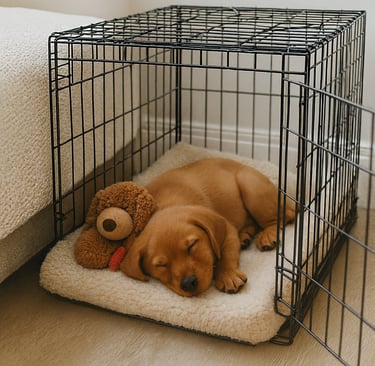
Let’s talk crate training.
Bringing a new puppy home is equal parts exciting and overwhelming. Between potty training, sleepless nights, and learning each other’s routines, crate training often brings up a lot of questions — and sometimes a little guilt.
But when done correctly, crate training isn’t about confinement. It’s about creating a safe, comforting space your puppy can relax in, sleep peacefully, and feel secure.
As a veterinary technician and lifelong pet lover, I’ve seen firsthand how crate training can support both puppies and their humans — especially during those early months.
What Is Crate Training?
Crate training teaches your puppy that their crate is a positive, calm place — not a punishment. Dogs are naturally den animals, and a properly sized crate can feel like a little bedroom just for them.
A crate can help with:
Potty training
Preventing unsafe chewing
Encouraging rest and routine
Reducing anxiety
Keeping your puppy safe when you can’t supervise
Why Crate Training Is So Important for Puppies
Puppies need a lot of sleep — often 18–20 hours a day. Without structure, many puppies become overtired, overstimulated, and cranky (just like toddlers). Young puppies need sleep, but they don’t always know how to rest on their own. A crate helps signal that nighttime is for sleeping. Crates prevent access to cords, furniture, and other hazards while you’re asleep or not keeping an eye on your puppy, giving you peace of mind and keeping your puppy protected.
Crate training helps:
Teach your puppy how to settle and self-soothe
Support healthy sleep habits
Prevent accidents and destructive behaviors
Create predictability and routine
From a veterinary perspective, crates are also incredibly helpful during recovery from illness or injury later in life — so learning early makes future situations far less stressful.
How to Make the Crate a Positive Space
The goal is for your puppy to choose the crate, not fear it.
Here’s how to build positive associations:
Use soft bedding or a crate mat
Add a safe chew or enrichment toy
Toss treats inside and let your puppy explore on their own
Never force your puppy into the crate
Keep the door open during early introductions
Short, positive sessions go a long way.
Placing the Crate Next to Your Bed
One of my favorite crate training tips for new puppies is placing the crate next to your bed at night, especially during the first few weeks.
This helps because:
Puppies feel comforted by your presence
You can hear when they need a potty break
It reduces nighttime anxiety and crying
It builds trust early on
Many puppies settle faster knowing you’re nearby — and this setup often leads to better sleep for everyone.
A Note About Snuggle Puppy (Why It Helps So Much)
A Snuggle Puppy (affiliate link) can be a game-changer for crate training. Designed to mimic warmth and a heartbeat, it provides comfort similar to littermates.
Pro tip: If possible, gently rub some of your puppy’s littermate scent onto the Snuggle Puppy. Familiar smells can provide extra comfort and help your puppy feel more secure, especially during those first few nights away from their litter.
I often recommend it for:
Puppies adjusting to sleeping alone
First nights in a new home
Reducing stress during crate time
While every puppy is different, many respond beautifully to the added sense of security.
Crate Training Tips to Keep in Mind
The crate should be just large enough for your puppy to stand, turn, and lie down
Worried about buying a crate for a puppy who’s still growing? You’re not alone! One simple solution is to choose a crate that comes with a movable divider (like this one). This allows you to adjust the size of the crate as your puppy grows, giving them just enough space to feel comfortable now — and plenty of room as they get bigger. It’s a practical option that grows right along with your pup.
Crate time should be balanced with play, training, and potty breaks
Whining doesn’t always mean distress — pause and observe before reacting
Never use the crate as punishment
Consistency matters more than perfection
🐾 Sample Puppy Crate Training Schedule (Day + Night)
Morning
7:00–8:00 AM
Potty break immediately after waking
Short playtime or gentle walk
Breakfast
Potty break again
Crate time (nap) - from 8:00 to 10:00 AM
Mid-Morning
10:00–11:30 AM
Potty break
Short training session or play
Supervised free time
Crate time (nap) - from 11:30 to 1:30 PM
Midday
1:30–2:30 PM
Potty break
Lunch (if feeding 3 meals/day)
Calm play or enrichment
Crate time (nap) - from 2:30 to 4:30 PM
Evening
4:30–6:30 PM
Dinner
Potty break
Family time / calm play
Short crate session while you’re home (builds comfort)
Crate time (nap) - from 6:30 to 8:00 PM
Bedtime Routine
8:00–10:00 PM
Final potty break
Calm wind-down (no rough play)
Puppy goes into crate for the night
Crate placed near your bed if possible
💤 Young puppies may need 1–2 nighttime potty breaks depending on age.
Ideally puppies should not be in their crate for more than three or four hours at a time. As you puppy grows, you can extend times in the crate.
When to Ask for Help
Every puppy learns at their own pace. If crate training feels especially difficult or your puppy shows signs of panic or distress, reach out to your veterinarian or a qualified trainer for guidance.
Crate training should always feel supportive, never forced.
Want to know what other essentials I recommend for your new puppy? See my blog post My Puppy Essentials (by clicking here).
Final Thoughts
Crate training is one of the most helpful foundations you can give your puppy. When introduced gently and thoughtfully, a crate becomes more than a training tool — it becomes a place of comfort, rest, and safety.
You’re not doing it wrong. You’re building security.
Some of the links in this post are affiliate links, which means I may earn a small commission if you choose to make a purchase through them — at no additional cost to you. I only share products I personally use, love, or genuinely believe can be helpful for you and your pet. Thank you for supporting AJ Creative Collective + Paws & Home Co and helping me continue to create helpful, educational content.
Disclaimer:
The information shared in this post is based on my personal experience and professional background, and is intended for general educational purposes only. I am not a certified dog trainer or animal behaviorist. Every puppy is unique, and what works for one may not work for another. Crate training should always be approached with patience and never forced. If you are experiencing challenges with crate training or have concerns about your puppy’s behavior, please consult a qualified dog trainer, veterinary behaviorist, or your veterinarian for personalized guidance.
© 2025 AJ Creative Collective. All rights reserved. No part of this website may be reproduced without permission.